

Every year, almost 45,000 people give up hope and die by suicide, a painful act we stop to ponder every September during National Suicide Prevention Awareness Month.
In the past few years, we have witnessed several high-profile celebrity suicides and staggering new data – a 30 percent rise in the number of people taking their own lives since 1999. These numbers pale in comparison to those left bereaved by suicide–often called “suicide loss survivors”—making it more critical than ever to shine a spotlight on this highly stigmatized mental health concern.
In June, the U.S. Department of Veterans Affairs (VA) released data showing that veteran suicide numbers are significantly higher than non-veterans and are not declining. These reports have set off alarms on social media, with numerous blogs and Facebook testimonials highlighting peoples’ struggles with depression, and others sharing the loss of family members and friends.
The statistics in America are shocking. In 2024, 48,824 Americans died by suicide, making suicide the 10th leading cause of death in the United States, according to the Centers for Disease Control and Prevention (CDC).
The burden is especially significant among veterans. According to the U.S. Department of Veterans Affairs’ most recent annual report, 6,398 veterans died by suicide in 2023—an average of 17.5 veterans every day.
The urgency is also increasingly clear among young people. New research published in JAMA Pediatrics found that among U.S. children ages 10 to 14, the suicide rate for girls more than quadrupled between 2007 and 2024, while the rate for boys nearly doubled. By 2024, a gender gap that had historically been substantial had nearly disappeared.
Together, these numbers underscore the urgent need to better understand the diverse factors that put people at risk—and to pursue new approaches to prevention.
For everyone mourning the death of someone who died by suicide, an inevitable question arises: Why did this happen? Unfortunately, we don’t have very good answers. We do know that suicide accompanies many behavioral brain disorders such as schizophrenia, bipolar disorder, and depression. Suicide is one of the leading causes of preventable death among these mental illnesses. Addiction is another common brain disorder in people who die by suicide with around 40% having abused alcohol and about 25% having a history of illicit substance abuse. But even here, we know that we lack answers. When the CDC released their latest numbers, they noted that almost half the people who died by suicide did not have a diagnosed mental illness.
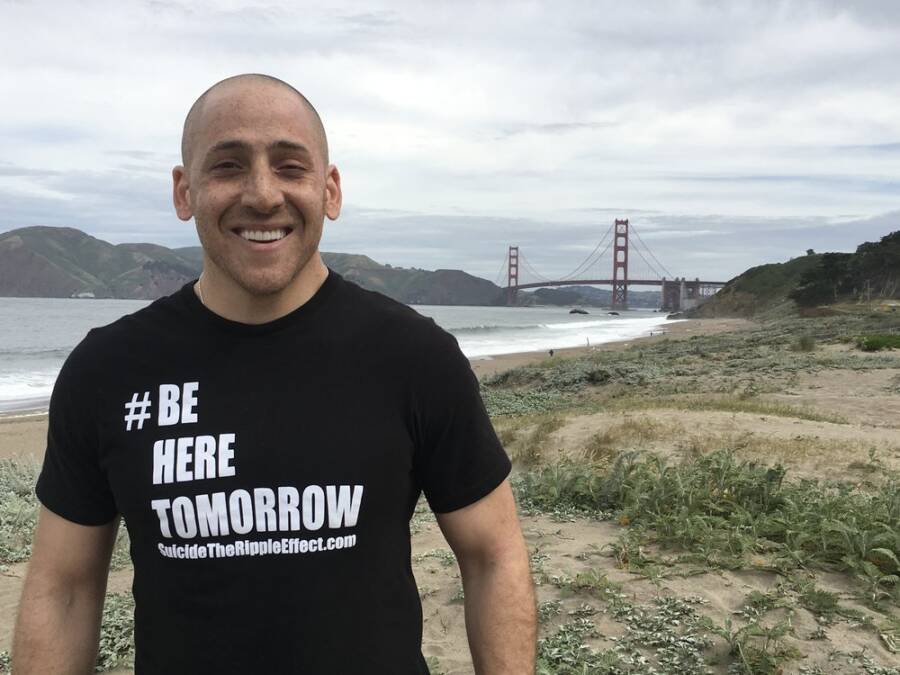
Kevin Jumped Off the Golden Gate Bridge and Survived to Tell His Story
The website BuzzFeed has a video with almost 7 million views where a man named Kevin Hines talks about how he attempted suicide by jumping from the Golden Gate bridge. “The millisecond my hand left rail, I felt instant regret,” Hines says. He then adds, “I thought to myself, ‘No one will know I didn’t want to die.’”
Mr. Hines’ explanation fits with current scientific thinking that the majority of suicides occur as impulsive acts, with the brain functioning in an altered state. Many suicides that happen impulsively are usually successful if the person has easy access to lethal means such as firearms, poisons, a means of self-hanging, or jumping from hazardous heights. When researchers have studied people who died by suicide—interviewing family members and physicians, and studying medical records, in a process called a psychological autopsy—they have found those who completed suicide tended to have higher levels of aggression.
It is also clear from many studies that suicide runs in families and has some genetic roots. In fact, studies of twins show that 43% of the likelihood of dying by suicide is determined by one’s genes. Family studies have consistently found that suicidal behavior is partially explained by transmission within families of impulsive and aggressive traits. And relatives of suicide completers have also been found to have elevated levels of impulsive-aggressive traits and are themselves more likely to have histories of suicidal behavior.
To understand this issue better, we have to bring the study of suicide into mainstream neuroscience and treat the condition like every other brain disorder. People who die by suicide are experiencing problems with mood, impulse control and aggression, all of which involve discrete circuits in the brain that regulate these aspects of human experience, but we still don’t understand how these circuits go haywire in the brains of suicide victims.
Scientists at the Lieber Institute for Brain Development have been studying how genes are turned on in cells in the brain associated with completed suicide and have discovered intriguing insights to which cells are involved and how their biology is altered. Even more importantly they have found that the means by which individuals kill themselves, particularly if they employ a violent method, is related to specific genes in the brain and to specific cells. This offers a hint of a path to uncovering interventions that could prevent such acts.
Most likely the propensity for specific malfunctions in the relevant brain circuitry began to form early in development, perhaps even inside the womb. Extreme stress in early childhood seems to exaggerate the effects of this developmental propensity. With other brain disorders such as schizophrenia, bipolar disorder, and depression, we have an increasingly rich landscape of research delving into the biology and genetics of these diseases, but suicide is in need of much more attention. We do know, for example, that lithium and perhaps some psychedelics seems to reduce suicidal intent, but we do not understand the biological mechanisms for why this is so.
Refocusing suicide research necessitates public and private collaborations. Right now about six times as many people in the United States die by taking their own lives as do from HIV/AIDS or heart disease, but the money to study suicide is far below what is committed to these illnesses.
In fact, the federal government spent more money last year to study dietary supplements than to understand why Americans decide to take their own lives.
It’s about time we do better.

Daniel R. Weinberger, M.D.
SUBSCRIBE TO THE DESK
###
Media Contact: Oluwaseyi Abujade, media@libd.org